Decorative Bunting Banner with Tropical
A Designer’s First Look: Bold, Playful, and Instantly Summer-Ready
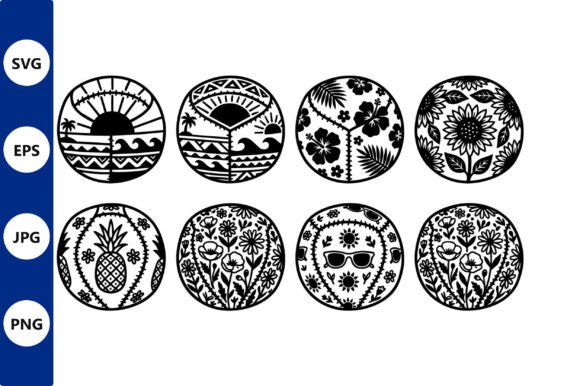
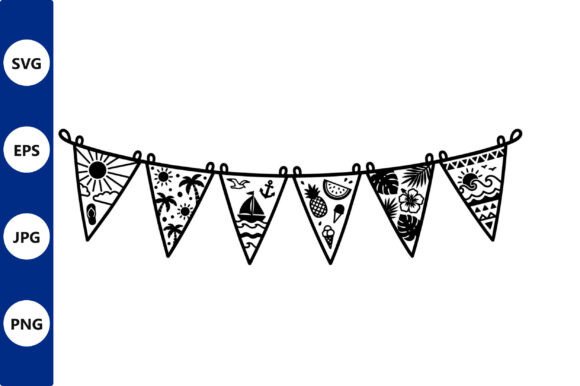
When Decorative Bunting Banner with Tropical landed in my inbox, I paused mid-coffee. Not because it’s flashy—but because it’s clear. The horizontal string of triangular flags, each carrying a distinct tropical motif or seafaring symbol in confident black line art, reads instantly as festive without shouting. There’s no visual clutter, no over-rendered shading—just rhythm, repetition, and relaxed confidence. It feels like something you’d sketch on a napkin at a beachside café and then immediately want to stitch onto a linen tea towel or the chest of a relaxed-fit sweatshirt. For embroidery designers who live in the space between illustration and stitchability, that clarity is gold.
Where This Design Naturally Lands—And Why It Sells
I recently used Decorative Bunting Banner with Tropical as the centerpiece for a custom embroidered tote bag for a local boutique launching a summer capsule collection. The banner wrapped cleanly across the front panel—no awkward cropping, no lost flags—and customers kept asking, “Is that hand-drawn?” That’s the magic: its bold line art translates beautifully into clean satin and running stitches. It works especially well on:
- Tote bags and aprons—where horizontal scale and graphic impact matter most;
- Sweatshirts and relaxed tees—the spacing between flags allows fabric drape to breathe;
- Baby items and nursery pillows—its cheerful but uncluttered energy reads as joyful, not chaotic;
- Embroidered patches—each flag holds up well when isolated or grouped;
- Kitchen towels and tea towels—the line weight stays legible even after repeated washing (with proper stabilizer);
- Etsy listings and craft fair merchandise—it’s distinctive enough to stand out in a sea of florals and script fonts.
This isn’t just another tropical clipart file—it’s a cohesive embroidery design built for real-world use, not just digital display.
Real Embroidery Realities: Where to Lean In—and Where to Pause
That said, Decorative Bunting Banner with Tropical isn’t universally plug-and-play. Its strength lies in its simplicity, but that also means attention must be paid to context. On thin fabrics like lightweight cotton voile or baby onesies, I recommend testing stitch density first—the open spaces between flags can cause puckering if fill areas are too dense. On stretchy fabric, especially for t-shirts or caps, a medium-weight cutaway stabilizer is non-negotiable; otherwise, the clean lines will distort under tension.
It’s less ideal for tiny hoop sizes (under 4” x 4”) unless you’re stitching only one or two flags as a standalone motif. The full banner needs room to land. Likewise, avoid placing it across curved surfaces like structured caps without digitizing adjustments—the flags may compress or skew. And while the black line art pops on light backgrounds, on dark fabric, confirm your thread color contrast: white or ecru works, but pale yellow or mint may disappear unless backed with underlay.
How It Shapes Perception—From Handmade Charm to Commercial Credibility
Customers don’t just buy a bunting—they buy the feeling it evokes. Decorative Bunting Banner with Tropical delivers instant summer nostalgia without leaning into cliché. That matters for brand consistency: whether you’re an Etsy seller curating a coastal lifestyle shop or a small-batch apparel decorator building a seasonal line, this design reinforces warmth, approachability, and thoughtful curation. It elevates a plain tote into a personalized gift. It turns a basic sweatshirt into a boutique-ready piece. And because it’s rooted in strong Illustrations rather than photorealism, it photographs cleanly in mockups—critical for digital product previews and social media thumbnails.
For craft business owners, that translates directly to buyer engagement. People linger on listings with clear, joyful graphics. They imagine gifting them. They trust the handmade presentation because the design itself feels intentional—not generic, not rushed.
Practical Notes Every Embroidery Designer Should Run Through
Before stitching Decorative Bunting Banner with Tropical into your next project, here’s what I always do:
- Test on scrap fabric—especially if using textured linen, terry cloth, or blends;
- Check thread color contrast on both light and dark backgrounds before finalizing;
- Review stitch density—if the file includes fill elements, ensure they won’t overwhelm delicate fabrics;
- Confirm hoop size compatibility—measure the full banner width against your standard hoops;
- Inspect small details—like anchor lines or palm frond tips—to ensure they’ll resolve cleanly at your intended scale;
- Try a black-and-white mockup—this reveals how well the line art holds up without color crutches;
- Use appropriate stabilizer—cutaway for knits, tear-away for stable wovens, and fusible for lightweight layers;
- Verify licensing—since this is a Graphics asset, confirm whether commercial use (e.g., selling finished embroidered totes) is permitted before listing.
None of these steps are about fixing flaws—they’re about honoring the design’s intent and ensuring your finished product reflects the same care that went into its creation.
Final Thought: A Reliable Workhorse With Personality
Decorative Bunting Banner with Tropical won’t win awards for complexity—but it doesn’t need to. In the daily work of embroidery design, reliability, clarity, and mood are just as vital as technical flourish. It’s the kind of machine embroidery design that makes clients smile before the first stitch drops. Whether you’re stitching a holiday gift, prepping a batch of boutique pillow covers, or building a summer-themed digital embroidery file collection, this banner earns its place—not as filler, but as a thoughtful, functional, quietly confident design choice.