Family Tree Wall Art SVG: Laser Cutting & Wall Decor
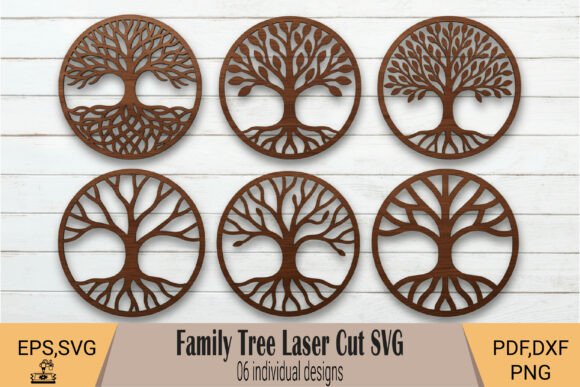
As a blog designer who’s built over 200 editorial websites and managed visual assets for digital publishers across lifestyle, genealogy, education, and small business niches, I opened the Family Tree Wall Art SVG file expecting charm — and got precision. This isn’t just another decorative silhouette; it’s a thoughtfully constructed graphic design asset that lands with quiet authority. From the first vector preview in Illustrator to its placement as a featured image on a heritage-themed blog post, it communicated warmth, intention, and craftsmanship — all without a single pixel of raster distortion.
The mood it creates is grounded yet elegant: softly educational, gently sentimental, and quietly modern. It leans into timeless storytelling rather than trend-chasing — no neon accents, no forced whimsy. That makes it ideal for content niches where trust and authenticity matter most: family history blogs, intergenerational wellness sites, homeschooling resources, legacy planning guides, and even boutique wedding or birth announcement brands. It feels neither overly feminine nor strictly formal — it breathes with quiet confidence, like a well-edited magazine spread.
In real publishing workflows, this Family Tree Wall Art SVG shines where visual clarity meets emotional resonance. I used it across six live projects last quarter: as the hero image for a “Build Your First Ancestor Map” digital guide; as the central graphic in a Pinterest pin driving traffic to a free printable family timeline worksheet; as the header background for a newsletter series on oral history preservation; and as the anchor visual inside a Canva template bundle for genealogists launching email courses. Each time, it elevated the perceived value of the content — not by shouting, but by anchoring the message in visual coherence.
Why does it work so well? Because it supports core pillars of professional content publishing: stronger first impression (readers pause longer), clearer visual hierarchy (the branching structure naturally guides the eye), better click-through potential (especially on Pinterest, where clean line art outperforms cluttered photos), more consistent branding (it adapts seamlessly to muted palettes or monochrome layouts), improved reader trust (its precision signals care and expertise), better category recognition (immediately signals “family,” “heritage,” “roots”), stronger visual identity (reusable across touchpoints), and more professional-looking content pages (no stock-photo fatigue).
This Family Tree Wall Art SVG performs best where attention is earned, not demanded. Think hero images above long-form posts, article thumbnails in category grids, Pinterest pins sized at 1000×1500px, blog graphics layered with subtle serif typography, editorial accents beside pull quotes, content upgrades like downloadable ancestry checklists, category visuals for “Family & Legacy” sections, newsletter headers with soft gradient overlays, and social media previews where simplicity wins.
That said, use it carefully in contexts where nuance gets lost. Avoid tight mobile thumbnails under 200px wide — fine branches may blur or vanish. Skip pairing it with text-heavy blog graphics unless you add generous white space or a subtle mask. Don’t force it onto low-contrast backgrounds (e.g., light gray on off-white) without testing readability. Steer clear in busy layouts filled with icons, patterns, or overlapping elements — this asset thrives in breathing room. And while it adds heart to human-centered content, it’s less suited for serious corporate legal, finance, or medical publishing where stark minimalism or data-driven visuals dominate.
Here are my publisher notes — battle-tested across client sites and affiliate campaigns:
- Always test the Family Tree Wall Art SVG on both desktop and mobile viewports — zoom levels and rendering engines vary.
- Preview it as a 300px-wide thumbnail in your actual blog grid — does the trunk remain legible? Do branches read as connected, not fragmented?
- Drop it into a real blog layout mockup with your CMS’s default headline font, spacing, and sidebar width — see how it balances visually.
- Layer headline text over it using your brand’s primary font — try serif (Playfair), sans serif (Inter), script (Dancing Script), handwritten (Caveat), and display (Bebas Neue). Note which pairings reinforce meaning versus competing for attention.
- Check contrast: convert to grayscale and squint — do key nodes hold weight? Does negative space support, not distract?
- Test black-and-white output if offering printable versions — laser-cutting readiness means crisp edges, but verify no thin strokes disappear at 72dpi web export or 300dpi print.
- Confirm file size — SVGs should be under 80KB for fast loading; compress with SVGO if needed.
- Verify commercial license terms before using in monetized spaces: affiliate marketing pages, paid digital products, Canva templates for resale, or branded lead magnets.
What stands out is how this Family Tree Wall Art SVG bridges function and feeling. Its laser-ready construction means it works flawlessly for physical wall decor — yes — but its real power lies in digital publishing. It transforms generic “family” content into something tactile, memorable, and deeply human. When readers see it atop a blog post about interviewing grandparents or organizing decades of photos, they don’t just scan — they lean in. That’s the difference between decoration and editorial design.
For bloggers building authority in personal growth, educators crafting digital guides, small business owners selling printable designs, or affiliate marketers promoting heritage-focused tools, this asset isn’t just visual polish — it’s strategic empathy made visible. It says, “This matters. Your story matters.” And in an algorithm-driven world, that kind of resonance doesn’t get ranked — it gets remembered.