Celestial Butterfly Moon Wreath Line Art
As a designer who’s stitched hundreds of custom pieces—from boutique baby onesies to Etsy best-selling tote bags—I opened Celestial Butterfly Moon Wreath Line Art expecting delicate charm. What I found was something more intentional: a quiet, balanced line art composition that breathes well on fabric. It’s not fussy. It doesn’t shout. But it *holds space*—and that matters more than you’d think when translating a digital illustration into real-world embroidery.
A Design That Knows Its Role
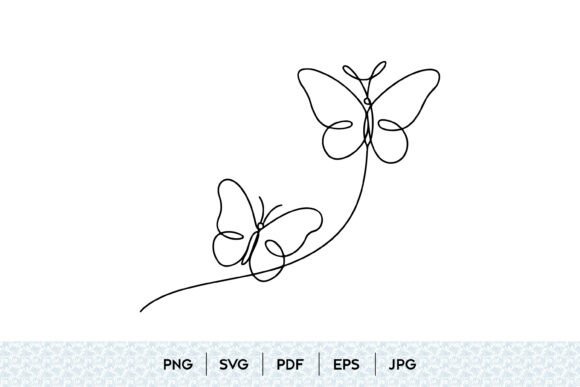
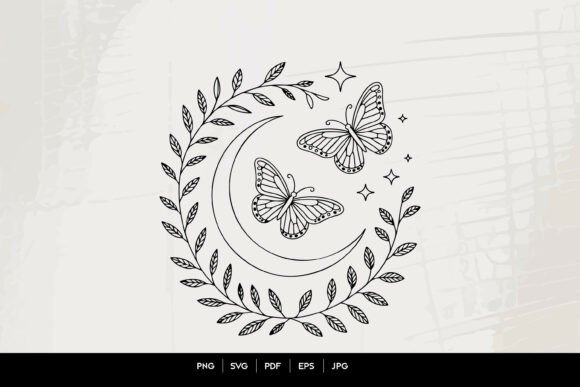
This isn’t a bold monogram or a dense floral fill—it’s a celestial wreath built around a crescent moon, with two stylized butterflies nestled in the curve. The linework is clean, consistent in weight, and intentionally open. There are no tiny interior details, no overlapping fine lines, no fragile tendrils thinner than 0.3mm. That simplicity is its greatest strength for embroidery use.
I immediately pictured it on a natural linen tea towel for a small shop launch—soft, earthy, and quietly magical. Or as a single chest embroidery on an oatmeal-toned sweatshirt for a boho wedding gift. It reads clearly at 3.5–4 inches wide, which fits comfortably in a standard 4×4 hoop without crowding. No scaling gymnastics required.
Where It Shines (and Where It Asks for Care)
Celestial Butterfly Moon Wreath Line Art performs beautifully on stable, medium-weight fabrics: cotton twill for patches, midweight knit for sweatshirts, quilting cotton for pillow covers, and even light canvas for aprons. Its open structure means stitch density stays moderate—no heavy fill stitches to buckle thin fabric or cause puckering on baby onesies.
For custom apparel, it works especially well as a subtle back-shoulder detail on a crewneck or a centered chest motif on a relaxed-fit tee. On a tote bag design, it anchors the upper corner without overwhelming the canvas. And for personalized gifts? Think a crescent-moon-and-butterfly trio embroidered beside a child’s name on a nursery blanket—elegant, gender-neutral, and timeless.
But here’s where attention matters: avoid cramming it into hoops smaller than 3.5 inches. Those butterfly wingtips and moon curves need breathing room. On highly textured fabrics—like bouclé or thick terry—test first: the line art’s elegance relies on clarity, and texture can blur its definition. Same goes for stretchy knits: use cutaway stabilizer underneath and consider reducing stitch speed to prevent distortion.
Dark fabric? It’ll read beautifully—if you choose high-contrast thread (ivory, pale gold, or soft silver work better than stark white). Light fabric? Deep navy or charcoal thread adds grounded mystique. Skip neon or metallic unless you’re intentionally going editorial—the design’s mood is serene, not flashy.
Real Project Test: A Handmade Baby Cap
Last week, I prepped a batch of organic cotton baby caps for a local boutique. We needed something gentle but distinctive—nothing cutesy, nothing overly literal. Celestial Butterfly Moon Wreath Line Art landed perfectly above the left ear, sized to 2.75 inches. I used a lightweight tear-away stabilizer, 40-weight cotton thread in heather grey, and ran it on a mid-range commercial machine.
Result? Crisp lines. No skipped stitches. No thread breaks. The cap looked handmade—not mass-produced—and customers responded to its quiet intentionality. One mom told me she bought two: one for her newborn, one framed as nursery wall art. That crossover appeal—embroidered patch to printable mockup to digital product preview—is rare. This design bridges those uses naturally.
What It Adds to Your Craft Business
If you’re an Etsy seller, a small shop product, or a creative entrepreneur building a cohesive brand, Celestial Butterfly Moon Wreath Line Art elevates perceived value without demanding premium pricing. Its theme—mystical but approachable—resonates across audiences: spiritual seekers, nature lovers, minimalist parents, and modern brides alike.
It supports brand consistency: pair it with simple serif fonts and muted palettes, and your entire product line feels curated, not scattered. It also boosts buyer engagement. Customers pause longer on listings featuring this design—not because it’s loud, but because it invites quiet reflection. That pause often becomes a click, then a cart, then a repeat order.
For commercial embroidery clients, it signals professionalism. You’re not just stitching a clipart butterfly—you’re offering a considered, scalable design asset. That builds trust faster than any sales pitch.
Practical Designer Notes Before You Stitch
- Always test on scrap fabric first—especially if using textured, dark, or stretchy materials.
- Check thread color contrast in natural light; screen previews lie.
- Review stitch density in your embroidery software—this line art shouldn’t need heavy underlay, but confirm.
- Confirm hoop size compatibility before digitizing or sending to production.
- Inspect small details at actual stitch size: moon craters, wing veins, and curve continuity matter more than they look on screen.
- Test black-and-white mockups to ensure legibility across fabric colors.
- Use proper stabilizer: tear-away for stable wovens, cutaway for knits or lightweight fabrics.
- Verify licensing before selling finished items or bundling the digital embroidery file—it’s listed as Graphics, but commercial use terms vary by seller.
This isn’t just another machine embroidery design. It’s a thoughtful piece of Illustrations crafted for translation—into thread, into product, into meaning. Whether you’re stitching a holiday embroidery gift, launching a craft business line, or designing a limited-run embroidered patch, Celestial Butterfly Moon Wreath Line Art earns its place—not because it’s trendy, but because it’s built to last in both stitch and sentiment.