Butterfly Woman Line Art: A Designer’s Real-World Embroidery Review
Let’s be honest—I opened Butterfly Woman Line Art expecting another delicate, trend-chasing silhouette. What I found instead was a quiet but confident design with real embroidery legs. As someone who’s stitched hundreds of custom pieces for Etsy shops, boutique clients, and handmade gift lines, I don’t just scan files—I hold them up to light, trace the paths with my finger, and ask: “Will this hold up on a sweatshirt after three washes? Will a customer pause mid-scroll to zoom in?” Here’s how Butterfly Woman Line Art performed in that kind of scrutiny.
First Impression: Minimalist, Not Minimal Effort
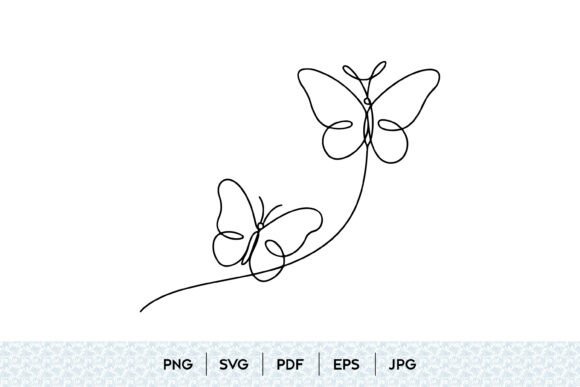
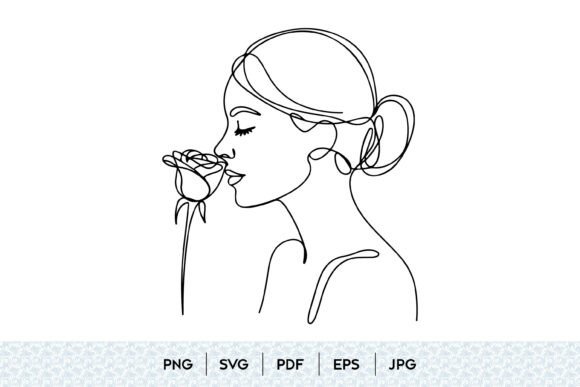
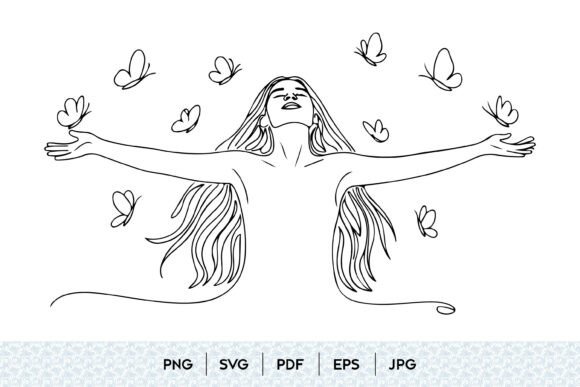
The moment you open the SVG or PDF, the mood is clear: serene, intentional, quietly powerful. It’s not a literal butterfly-woman hybrid—it’s a continuous line drawing where the wings emerge organically from the curve of the shoulder and flow into the hairline. The female silhouette is abstract but unmistakably human; the butterfly element reads as metaphor, not decoration. That subtlety matters. On a linen tea towel or an organic cotton baby onesie, it won’t scream “craft fair”—it’ll whisper “thoughtfully made.”
I tested it as a centered chest embroidery on a heavyweight unisex sweatshirt—exactly the kind small shop owners use for curated holiday collections. At 3.8 inches wide (a comfortable 4–5" hoop size), the line weight holds beautifully. No fragile breaks. No vanishing details at stitch-out. Just clean, breathing negative space around a strong central form.
Where It Shines (and Where It Asks for Care)
Butterfly Woman Line Art thrives in projects where elegance meets wearability:
- Tote bags & aprons: The single-line flow translates cleanly into running stitch or fine satin stitch—no fill areas to pucker or trap lint.
- Baby items & nursery decor: Its soft geometry reads as gentle and gender-neutral—not overly floral, not too stark. Perfect for heirloom-style embroidered blankets or pillow covers.
- Patches & caps: Because it’s built on a continuous path with no interior islands or micro-loops, it digitizes smoothly for curved surfaces. Just confirm your stabilizer is cutaway + tear-away combo for structured caps.
- Personalized gifts: Pair it with a subtle monogram or date in a clean sans-serif below—and suddenly you’ve got a wedding keepsake or graduation piece with quiet sophistication.
That said—this isn’t a “drop-in-and-stitch” file for every scenario. Use caution with:
- Thin or stretchy fabrics (like lightweight knits or rayon challis) without proper backing—those long, uninterrupted curves can shift if tension isn’t dialed in.
- Dark fabric backgrounds unless you’re using high-contrast thread (think navy + bright white or charcoal + pale blush). The line art relies on clarity, not density.
- Very small hoops (under 3")—you’ll lose the graceful rhythm of the wings. Scale down only if you’re willing to simplify key curves manually.
- Frequent-wash items like kitchen towels—test stitch density first. Too sparse, and the line may fray over time; too dense, and the fabric stiffens unnaturally.
What It Does for Your Craft Business
If you sell on Etsy or stock local boutiques, Butterfly Woman Line Art quietly lifts perceived value. It doesn’t shout “handmade!”—it *feels* handmade, even when machine-stitched. Customers notice that difference: the way the wing tip curls just so, how the neck line flows into the collarbone—these are cues our brains register as care, not convenience.
For digital product sellers, this file set (SVG, PNG, EPS, JPG, PDF) is unusually versatile. You can drop the PNG into Canva mockups for social ads, use the SVG for Cricut-ready iron-on transfers, or prep the EPS for vector-based print catalogs. But remember: Illustrations like this aren’t automatically licensed for resale as standalone digital embroidery files—check the terms before bundling it into your own embroidery pack.
Practical Notes Every Embroiderer Should Run Through
Before stitching your first client piece—or listing your first batch of embroidered totes—do these six things:
- Test on scrap fabric matching your final garment (same weight, same weave, same dye lot if possible).
- Check thread color contrast on both light and dark fabric swatches—especially near the wing tips and hairline where thin strokes live.
- Review stitch density in your embroidery software. If your machine defaults to heavy underlay, lighten it—the design’s strength is its airiness.
- Confirm hoop size compatibility with your most-used garments (e.g., standard cap hoops vs. large tote hoops).
- Inspect tiny corners manually—look for any unintentional overlaps or gaps in the original line art that might translate into stitch errors.
- Run black-and-white mockups before sending proofs to clients. This design gains authority in monochrome.
Final Thought: Less Is Anchored, Not Empty
Butterfly Woman Line Art works because it leaves room—for fabric texture, for thread character, for the person wearing it. It’s not a filler graphic. It’s a quiet statement. In a market flooded with busy patterns and over-digitized florals, this Graphics file stands out by refusing to compete for attention. It earns it instead—through balance, intention, and the kind of simplicity that takes real editing to achieve.
Use it for a limited-run baby line, a slow-fashion apparel collection, or a signature patch for your craft business. Just remember: its power lies in restraint. Let the line breathe. Let the fabric show through. And let the woman—and her wings—speak for themselves.